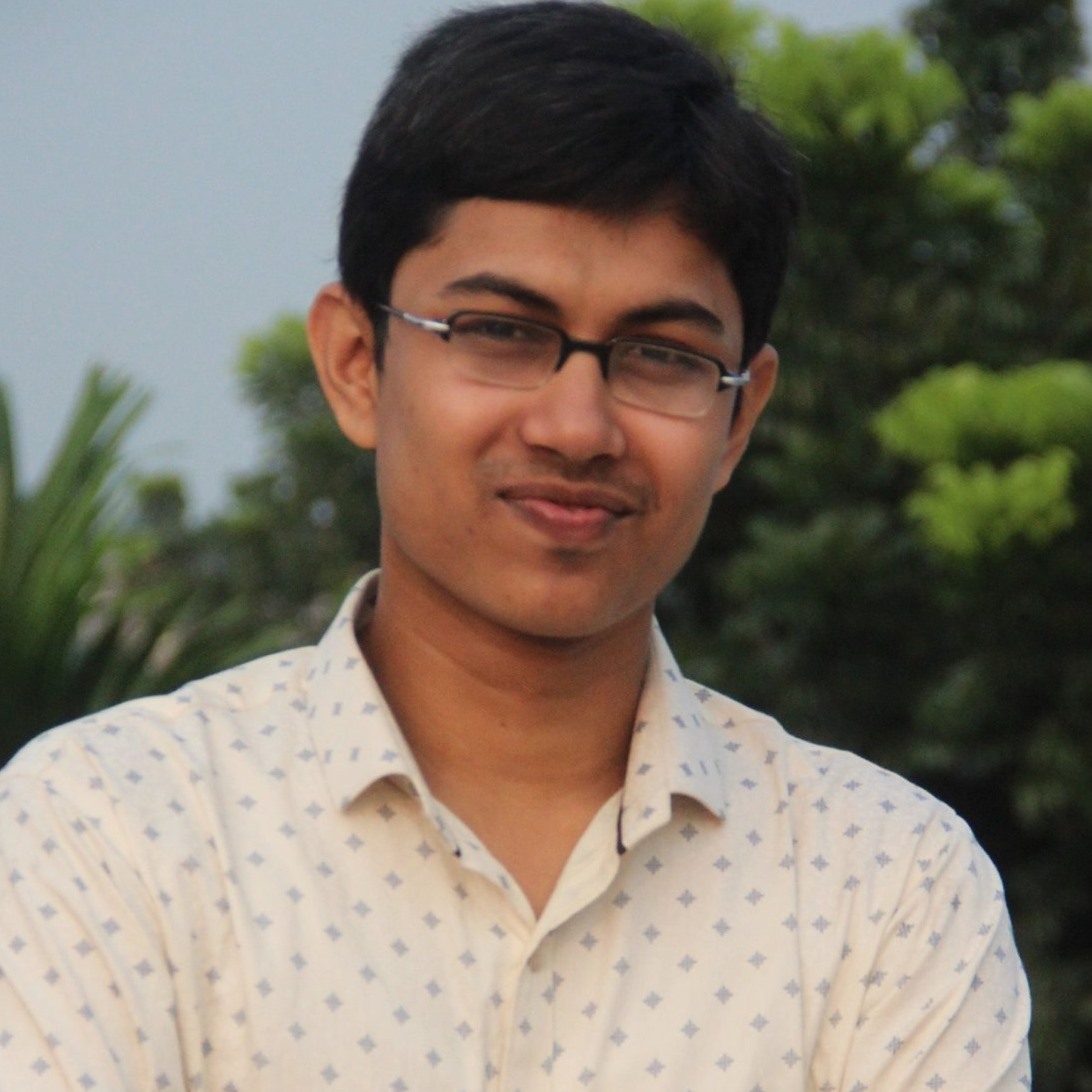
Engineering Intelligence at the Intersection of AI, Security, and Innovation.
I’m a Machine Learning Engineer and Cybersecurity enthusiast who loves building intelligent systems that are not only powerful but also secure. My journey spans GenAI, Computer Vision, and NLP, where I’ve explored mostly from fine-tuning LLMs to detecting deepfakes and strengthening 5G security. Along the way, I’ve had the chance to publish a research on 5G vulnerabilities and deploy AI models in highly restricted, bank-grade environments—where every detail mattered for both performance and security. What excites me most is bridging the worlds of AI innovation and cybersecurity resilience, turning cutting-edge ideas into real-world solutions.
Successfully organized and executed a Capture The Flag (CTF) competition, showcasing adept coordination, leadership, and problem-solving skills.
In this research I worked under the guidance of Prof. Md. Shohrab Hossain, alongside Prof. Ren-Hung Hwang and Prof. Ying-Dar Lin
from NYCU, Taiwan, on exploring the vulnerabilities of 5G. Our goal was to develop a system capable of identifying security weaknesses in 5G specifications. This work led to our
paper, ”5GPT: 5G Vulnerability Detection by Combining Zero-Shot Reasoning and Domain-Aware
Prompting,” which has been accepted for publication in IEEE-TIFS. Our approach combined
GPT-4’s zero-shot reasoning capabilities with a domain-aware prompting strategy, where we incorporated telecom-specific security properties, signaling rules, and hazard indicators. This allowed the
model to generate more accurate and technically grounded vulnerability hypotheses compared to standard prompting.
My responsibility was to put our ideas to the test; I dug deep into the UERANSIM
codebase. I tried to trace each potential vulnerability back to exact parts of the user equipment (UE)
and core network implementations. Having that code-level insight helped me simulate tricky scenarios like malformed messages (sent altered hash in reply), rare protocol deviations (turned on/off
ACK messages), and unusual signaling patterns (sent random messages while the registration process was going on) with great precision. With our collaborative effort, this combined approach of
smart AI prompting and hands-on system analysis uncovered 47 potential vulnerabilities, including
27 that had not been reported before. We were able to confirm 9 of those through practical testing
using Open5GS and UERANSIM.
This research explores both the creation and detection of deepfake content to better understand the dual use of generative AI in multimedia. On the generation side, it implements face-swapping pipelines using InsightFace, ONNX models, Variational Autoencoders (VAEs), and prototype GAN architectures to create realistic manipulated videos. On the detection side, it fine-tunes state-of-the-art transformer models (ViT, SigLIP) and integrates an LSTM classifier to capture temporal inconsistencies across video frames. The framework is optimized for GPU acceleration on Google Colab, supports automated dataset preparation, and offers reproducible pipelines for training, evaluation, and inference. By combining generation and detection in a single research environment, this work provides insights into both adversarial capabilities and defensive strategies against synthetic media threats.
We proposed a fully automated end-to-end framework that utilizes a Retrieval-Augmented Generation (RAG) pipeline. Our approach grounds LLM outputs in verified, domain-specific data to minimize hallucinations, and overcomes cross-section dependency challenges by integrating a robust con- text retrieval mechanism. Using this approach, we have generated 800 conformance test-cases for essential 5G mobility management procedures in under 3 hours. Overall, our framework offers a scalable, reliable, and robust solution for automating compliance testing in complex, ever-changing domains like 5G and beyond.
I am working on Data Leakage Detection in Microservices, under the supervision of Prof. Md. Shohrab Hossain from BUET and Prof. Suryadipta Majumdar from Concordia University, with the support from United International University (UIU). This funded research investigates data leakage threats in containerized cloud environments by analyzing malicious container images and runtime attack techniques in Docker and Kubernetes. We simulate adversarial scenarios including reverse-shell execution and covert secret exfiltration to evaluate the effectiveness of runtime monitoring, syscall tracing, and container security mechanisms. To strengthen container security, we evaluate existing vulnerability scanners and runtime detection approaches, highlighting their limitations in identifying malicious behavior that does not rely on known software vulnerabilities.
This study presents an AI-driven audio-to-report system that generates structured climate loss and damage reports from Bangla dialect speech, targeting disaster-affected, low-literacy communities. By integrating speech recognition, NLP, and automated reporting, the framework demonstrates strong performance across multiple Bangladeshi dialects, highlighting its potential as a scalable and efficient solution for rapid climate disaster reporting.
This study analyzed the temporal trends and seasonal variations in maximum temperature, minimum temperature, average temperature, and discomfort index in Dhaka city from 1981 to 2020.The discomfort index calculated using Thom Discomfort Index equation and employs a combination of statistical techniques to assess the impact of temperature changes on the discomfort index.
We investigate the potential of a deceased animal brain to process signals. Specifically, we examine the brain’s responses to external stimuli in the form of electrical signals and its ability to act as a memory unit. We also explore the transfer characteristics of the deceased goat brain and elucidate the corresponding function through representative circuits.
Funding Agency: University Grants Commission (UGC), Bangladesh
Project Title: AI-Powered Contradiction and Conflict Detection in Evolving Documents
Role: Researcher
Duration: Dec 2025 - Dec 2027
Focus: RAG and knowledge graph based document understanding and contradiction detection over time.
Funding Agency: Bangladesh Industry Research Development & Innovation (BIRDI)
Project Title: AI-Augmented Repository-Level Bug Localization and Automated Patch Generation System with Large-Scale Codebase Dataset
Role: Researcher
Duration: Under Review
Focus: Automated software debugging and improvement of code reliability using AI-driven techniques, produces a high-quality debugging dataset, strengthens AI-based software engineering capabilities.
This project simulates Man-in-the-Middle (MITM) attacks in a Kubernetes + Istio service mesh and builds an anomaly detection framework based on latency features. Started with simuating various MITM attacks (service impersonation, traffic interception, metadata exposure) in a microservice architecture, and mitigation using Istio AuthorizationPolicies and scoped service accounts. Then developed an anomaly detection framework using Prometheus metrics to identify MITM-induced anomalies. By analyzing p50/p90/p99 latencies, dispersion indices, burstiness, drift measures, the system captures subtle delays and artifacts caused by malicious proxies. Lightweight models such as One-Class SVM, Isolation Forest, and shallow autoencoders are applied with sliding-window post-processing for stable detection.
The Audio Reporting System is an AI-powered platform that transforms disaster-related phone calls into structured, actionable PDF reports for emergency response teams. Designed to work without smartphones, apps, or internet access, it captures voice reports, transcribes them into text, extracts key details, and generates professional reports enriched with contextual information. With built-in scalability, human validation options, and a fine-tuning pipeline for continuous improvement, the system ensures faster, more reliable crisis reporting while empowering responders to act quickly and effectively.
This project investigates generating and detecting deepfake content to examine the dual use of generative AI in multimedia. It uses face-swapping with InsightFace, VAEs, and GANs for realistic video edits, while fine-tuning transformer models (ViT, SigLIP) and an LSTM classifier for temporal detection. Optimized for GPU on Google Colab with automated dataset management, it offers reproducible pipelines for training, evaluation, and inference, providing insights into both deepfake creation and defense
This project aims to design a smart water management model aligned with the under-development District Metering Area (DMA) System. The proposed system leverages IoT-enabled digital meters to automatically update water consumption and quality data to secure cloud storage at regular intervals. IoT sensors will continuously measure various water quality parameters, ensuring real-time monitoring and transparency. The stored data will be systematically fed into a machine learning model, enabling advanced comparison, analysis, and forecasting of water quality trends across different regions. By integrating IoT, cloud computing, and predictive analytics, this system will support proactive water management, early anomaly detection, and sustainable resource utilization.
Academic Project (CSE-472)
Project uses transformer model (encoder) layer to separate healthy heart signals from unhealthy ones. We used MIT-BIH Arrhythmia dataset to train and test our model. The model achieved high accuracy in classifying ECG signals. The project also includes data visualization using libraries like Matplotlib and Plotly to analyze ECG patterns and anomalies.
This project explores the relationship between gender inequality and climate change. The analysis leverages various data visualization and data manipulation libraries in Python to provide insights into how these two critical issues intersect. This was crafted to participate in the Nasa Space Apps Challenge, 2024 competition.
Collaboration Project
Collaborated with the Mechanical Engineering Department on a research project analyzing raw material import data (2017–2021). Applied K-Means and Gaussian Mixture Models to cluster metals based on import quantities and price variations
Academic Project (CSE-408)
Software designed to automate document processing by leveraging OCR technology and dynamic document templates.
Academic Project (CSE-216)
PeekAbook is an online book buying site where one can find various bookshops and buy books from those shops.
Java application utilizes JavaFX to create a visually engaging 3D model of the solar system.
Bangladesh University of Engineering and Technology (BUET)
CGPA: 3.55/4.00 (Senior year CGPA: 3.70/4.00)
Notre Dame College, Dhaka
GPA: 5.00/5.00
Won The Best Paper Award at the 12th International Conference on Next Generation Computing, Communication, Systems and Security. Paper Title: Bypassing Conventional eKYC: How Far Can We Go using Deepfake?
Became Poster Presentation Champion at International Conference on Networking System and Security (NSysS)
AI Meets Climate Action by OXFAM
WICC (Water Innovation Challenge Competition)
Government scholarship awarded by Dhaka Education Board for brilliant academic performance in Higher Secondary Certificate public examination.
Government scholarship awarded by Rajshahi Education Board for brilliant academic performance in School Secondary Certificate public examination.
সৃজনশীল মেধা অন্বেষণ প্রতিযোগিতা, বিজ্ঞান (Creative Talent Hunt, Science)
Inter Faculty Cricket Tournament Runner-up
Dhaka, Bangladesh
(+88) 01882637342
asifurbuet98@gmail.com
asifurndc8030@gmail.com